
















 DBA
DBA
 Education
 CXO
CXO
 MBA
MBA
 Data Science and Analytics
 Machine Learning and AI
 Management
 Accounting and Finance




.svg)
.svg)
Build your edge with CXO programs that blend business, leadership and tech
Lead the next era of enterprise transformation with CXO programs built for senior professionals navigating AI, disruption, and scale. Build true enterprise impact across AI, technology, leadership, and business strategy.
- Learn from global faculty, CXOs, and practitioners.
- 100% online, designed for experienced professionals.
- Master AI, technology, and business strategy to drive enterprise impact.
- World-class, accredited programs to choose from.

.png?width=1484&height=1248&name=Banner%20(1).png)
-
-1.webp?width=29&height=27&name=Phone%20Laptop%20(1)-1.webp)
Fully Online Format
-
.png?width=23&height=23&name=Shape%20(35).png)
10M+ Learners
-

100+ Countries Represented
-
-1.png?width=29&height=29&name=Document%20Checkmark%20(1)-1.png)
87% Course Completion
-
.webp?width=29&height=29&name=Clipboard%20Clock%20(1).webp)
20M+ Learning hours/year
-
.webp?width=29&height=29&name=Arrow%20Trending%20Checkmark%20(1).webp)
80+ University Partners
Upskill with Our Top Notch Programs


Top 1% worldwide (CWUR 2025)
Chief Technology and AI Officer Program
 Certification
-
 6 Months
-
 #1 Canadian university for innovation


Master’s and Doctorate
Master + Doctor of Business Administration (MBA + DBA)
-
Doctorate
-
36 Months
-
70,000+ Alumni network


Gain dual tech & business credibilty (III-B + IIM Udaipur)
Chief Technology and AI Officer Program
-
Certification
-
6 Months
-
2-Day AI Success Planning Workshop at IIIT-Bangalore.
70,000+ Alumni network
Doctor of Business Administration
-
Doctorate
-
27 Months
-
#1 university for working professionals in the U.S.
70,000+ Alumni network
Doctor of Business Administration in Emerging Technologies with Concentration in Generative AI
-
Doctorate
-
27 Months
-
Designed for working professionals and future AI leaders

Edgewood University alumni status
Doctorate in Business Administration
-
Doctorate
-
24 Months
-
1:1 thesis supervision and research workshops
Edgewood University alumni status
Dual Degree MBA and DBA
-
Doctorate
-
30 Months
-
Designed for mid to senior-level professionals


Optional on-campus immersion in Paris
Doctorate of Business Administration
-
Doctorate
-
24 Months
-
Live faculty-led sessions and peer networking


Member of IACBE, AACSB and ACBSP
Doctor of Business Administration
-
Doctorate
-
36 Months
-
Choose specialization from 7+ concentrations


IIM Kozhikode Executive Alumni Status
Chief Revenue & Growth Officer Programme
-
Certification
-
8 Months
-
Design enterprise-level growth and revenue strategies


Our Programs are Accredited!
Best-in-class content by leading faculty and industry leaders in the form of videos, cases and projects, assignments and live sessions.



.png?width=60&height=75&name=ACBSP%20(2).png)
%20(1).png?width=158&height=60&name=eduqua%20(1)%20(1).png)
%20(2).png?width=491&height=120&name=HLC%20Logo%20(1)%20(2).png)
%20(1).png?width=109&height=60&name=stars%20rating%20system%20(1)%20(1).png)
.png?width=116&height=60&name=PRME%20(2).png)
%20(1).png?width=79&height=60&name=IACBE%20(1)%20(1).png)
%20(1).png?width=62&height=60&name=Business%20Graduates%20Association%20(1)%20(1).png)
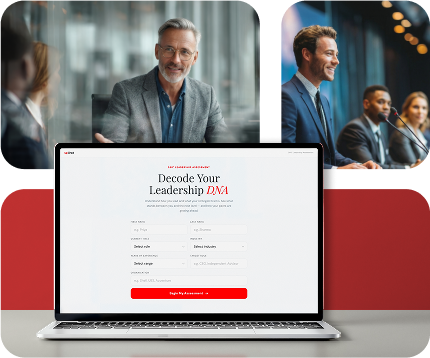
Find out what kind of business leader you are in 3 minutes
- 4 questions
- Scenario-based reflection
- Personalized leadership insights
Our Top University Partners

.png?width=392&height=60&name=GGU%20Logo%2060px%20(1).png)
.png?width=194&height=60&name=esgci%20logo%20(1).png)

.png?width=90&height=60&name=LBS%20Logo%2060px%20(1).png)
.png?width=205&height=60&name=LJMU%20logo%2060px%20(1).png)


%20(1).png?width=73&height=60&name=iiitb%20(3)%20(1).png)
CXO Programs: Key Industry Insights
Advance into the next era of business with industry-ready executive capabilities.

.png?width=18&height=20&name=Shape%20(32).png)
.png?width=29&height=25&name=Shape%20(9).png)
.png?width=21&height=21&name=Shape%20(24).png)
What sets these CXO programs apart from other online courses?
-
Real-world frameworks used to solve enterprise-scale problems.
-
.png?width=20&height=16&name=Shape%20(23).png)
Enterprise casework grounded in real business, and tech challenges.
-
Leadership simulations that mirror boardroom-level decision-making.
-
.png?width=16&height=20&name=Shape%20(33).png)
AI strategy labs focused on driving impact, not just understanding tools.
-
Boardroom-style exposure to high-stakes, cross-functional decisions.
-
.png?width=20&height=19&name=Shape%20(12).png)
Insights from global CXOs and practitioners navigating scale, and growth.
Who are these programs for?
- Senior managers preparing for VP or CXO roles who want to build enterprise-wide leadership across business, technology, and AI.
- Existing CXOs looking to strengthen their AI and digital edge to lead intelligent transformation and future-proof business strategy.
- Founders leading tech-enabled enterprises who need structured frameworks to strengthen decision-making in an AI-driven economy.
- Directors and transformation leaders responsible for driving digital, data, and AI initiatives across complex organizations.

What are the outcomes you will be able to achieve?
.png?width=46&height=40&name=Shape%20(11).png)
Lead enterprise AI and digital transformation
Translate emerging technologies into scalable systems, operating models, and measurable business outcomes.
-1.png?width=43&height=49&name=Shape%20(12)-1.png)
Build integrated technology and business roadmaps
Align AI, data, platforms, and strategy with long-term enterprise objectives.
-1.png?width=50&height=50&name=Shape%20(13)-1.png)
Manage P&L and strategic decision-making
Gain a deep understanding of financial drivers, risk, and value creation across complex organizations.
-1.png?width=45&height=50&name=Shape%20(14)-1.png)
Influence executive and board-level discussions
Get clarity, confidence, and data-backed perspectives that shape high-stakes business decisions.
-1.png?width=50&height=50&name=Shape%20(15)-1.png)
Accelerate growth using proven innovation frameworks
Identify opportunities, drive competitive advantage, and navigate disruption at scale.
What do our learners have to say?


AI has become such a big part of my services and everything I do on a daily basis.
AI has become such a big part of my services and everything I do on a daily basis. So, I will probably develop my own new practice in AI applied to strategy, AI applied to decision making, AI applied to efficiency. So, in this sense, I will have a wider portfolio of solutions. I've already increased my own productivity by, like, 50 times.
AI has become such a big part of my services and everything I do on a daily basis. So, I will probably develop my own new practice in AI applied to strategy, AI applied to decision making, AI applied to efficiency. So, in this sense, I will have a wider portfolio of solutions. I've already increased my own productivity by, like, 50 times. Read More
.png?width=90&height=90&name=Sergey%20(1).png)
Sergey Chumak
-
Learner, DBA in Emerging Technologies, Golden Gate University
The program is really valuable to me, not only from the subject matter
The program is really valuable to me, not only from the subject matter that we're studying, but also the chance to apply these ideas and the techniques that we're learning to actual problems. And so, the chance to apply what I'm learning to the problems that I'm encountering at work is a huge benefit to me.
The program is really valuable to me, not only from the subject matter that we're studying, but also the chance to apply these ideas and the techniques that we're learning to actual problems. And so, the chance to apply what I'm learning to the problems that I'm encountering at work is a huge benefit to me. Read More
.png?width=90&height=90&name=Courtlin%20(1).png)
Courtlin Holt-Nguyen
-
Learner, DBA in Emerging Technologies, Golden Gate University
So far, this program has actually helped me tremendously
So far, this program has actually helped me tremendously because it is in the area where it is upcoming and in an industry which is highly unregulated, which is the medical aesthetics and wellness industry. And with the knowledge that I've gained here, I'm going to bring some regulations and, at the same time, enhance the productivity of the business in this area.
So far, this program has actually helped me tremendously because it is in the area where it is upcoming and in an industry which is highly unregulated, which is the medical aesthetics and wellness industry. And with the knowledge that I've gained here, I'm going to bring some regulations and, at the same time, enhance the productivity of the business in this area. Read More

Pyn Lim
-
Learner, DBA in Emerging Technologies, Golden Gate University
Offerings
Services to Help You Achieve Your Goal
Access the various career development support services offered by upGrad to help you achieve your professional goals.
Cost Effective
- Further your career at 1/10 of the cost to the same on-campus program
Learn and Earn
- Get world-class credentials without leaving your job from the comfort of your home

Industry Driven
- Learn through a curriculum created by the industry for the industry
- Learn and get coached by accomplished practitioners from around the world
Flexible
- Experience world-class education on-demand through our proprietary app and website
Unparalleled Support
- 24 x 7 Support augmented with chatbot
- Get expert verified resolutions for all your doubts within hours
- Weekly live sessions with scholar-practitioners on doubts, career & communication
Career Preparation
-
1-1 Career Coaching
-
Career preparation modules
-
AI-powered Profile builder
-
Just-in-time mock interviews
- Post-program career support
Industry Mentorship
- Receive mentorship from leaders in the domain to help you reach your desired goal
Networking
- Get world-class credentials without your job from the comfort of your phone
Generative AI Blogs
You Might Like To Read






upGrad Learner Support
Monday - Saturday | 24 Hours
 Phone Number
 Email Address
*If we are unavailable to attend to your call, it is deemed that we have your consent to contact you in response.